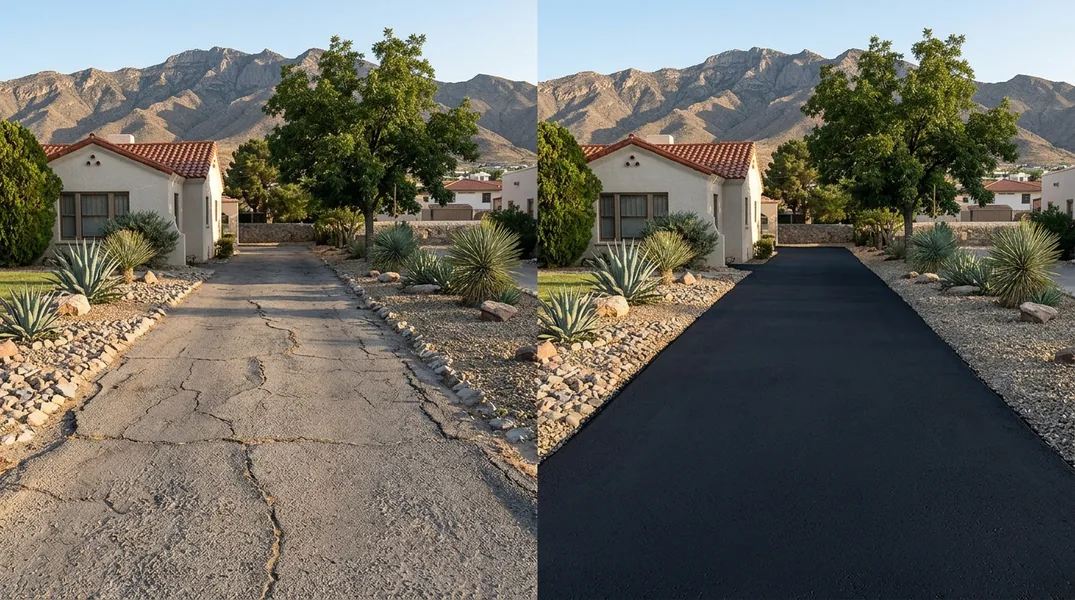
Understanding Asphalt vs Concrete Driveway Performance in Desert Climates
When you're planning a new driveway in El Paso, the choice between asphalt and concrete is more than just aesthetic. The desert climate here presents unique challenges that affect how each material performs over time. El Paso experiences extreme temperature fluctuations, intense UV radiation, and occasional heavy monsoon rains that can stress any driveway surface. Understanding how asphalt and concrete respond to these conditions will help you make an informed decision that protects your investment for years to come.
Both materials have distinct advantages and disadvantages in desert environments. Asphalt is flexible and absorbs heat, while concrete is rigid and reflects it. Neither is inherently superior in the desert; rather, each responds differently to thermal stress, moisture, and UV exposure. The key is understanding which material aligns with your budget, maintenance preferences, and long-term goals for your property.
How Desert Heat Affects Asphalt Driveways
Asphalt is a flexible material composed of bitumen (a petroleum-based binder) and aggregate. In El Paso's intense heat, asphalt softens slightly during the day, which actually helps it absorb the thermal stress rather than crack under pressure. This flexibility is one reason why Asphalt Driveway Paving & Installation remains popular in hot climates. However, the same heat that makes asphalt flexible also accelerates oxidation, the process where UV rays break down the bitumen binder. Over time, this causes your blacktop driveway to fade from rich black to gray and become brittle.
The asphalt driveway lifespan in desert conditions typically ranges from 15 to 20 years with proper maintenance, though some homeowners see 12 to 15 years in extreme heat environments. The intense UV exposure in the desert accelerates this timeline compared to cooler regions. To extend the life of your asphalt investment, regular seal coating every 2 to 3 years is essential. This protective layer shields the bitumen from UV rays and moisture, significantly slowing oxidation and extending durability. Without seal coating, you may find yourself needing Driveway Repair or Pothole Repair & Asphalt Patching much sooner than expected.
How Desert Heat Affects Concrete Driveways
Concrete is a rigid material made from cement, sand, aggregate, and water. Unlike asphalt, concrete doesn't flex with temperature changes. In the desert's extreme heat, concrete expands during the day and contracts at night. This constant thermal cycling creates stress that can lead to cracking, especially if the concrete wasn't properly installed with adequate expansion joints. The intense UV radiation in El Paso doesn't degrade concrete the way it does asphalt, but it can fade the surface and contribute to surface deterioration over decades.
Concrete driveways typically last 25 to 40 years in desert climates, making them longer-lasting than asphalt in terms of raw lifespan. However, concrete requires its own maintenance regimen. Cracks that develop from thermal stress can allow water penetration, leading to freeze-thaw damage during rare winter freezes or monsoon flooding. Sealing concrete every 2 to 3 years helps prevent water infiltration and extends its life. Additionally, concrete can become slippery when wet, which is a safety consideration during the occasional heavy rains that hit the region. Staining from oil and other substances is also more visible on concrete, requiring regular cleaning to maintain curb appeal.
Asphalt Over Concrete Driveway: A Hybrid Approach
Some homeowners in desert regions choose to install asphalt over concrete driveway foundations. This approach combines the durability of a concrete base with the flexibility and quick installation of asphalt. The concrete provides a stable, long-lasting foundation that resists thermal stress, while the asphalt layer on top offers a smoother, more attractive driving surface. This method can be cost-effective if you already have a concrete driveway in decent condition and want to refresh it without complete removal and replacement.
However, applying asphalt over concrete requires careful preparation. The concrete surface must be clean, properly graded for drainage, and free of major cracks or damage. The asphalt layer typically needs to be 2 to 3 inches thick to provide adequate durability. In El Paso's heat, this hybrid approach can work well if the underlying concrete is in good shape, but it's not a solution for severely damaged concrete. The asphalt overlay will still require regular maintenance, including seal coating every 2 to 3 years. If you're considering this option, professional assessment is critical to ensure the concrete base can support the overlay without future problems.
Maintenance Costs and Long-Term Durability Comparison
When comparing asphalt versus concrete, it's important to factor in total cost of ownership, not just installation pricing. Asphalt typically costs less to install upfront, usually 50 to 100 percent less per square foot than concrete. However, asphalt requires more frequent maintenance. Annual or bi-annual seal coating, crack filling, and occasional patching add up over time. In the desert, where UV exposure is intense, these maintenance costs increase. Over a 20-year period, asphalt maintenance can equal or exceed the initial installation cost.
Concrete has higher upfront installation costs but lower maintenance requirements in the short term. However, when concrete cracks in the desert heat, repairs can be expensive and difficult to blend seamlessly. Once concrete fails, replacement is often the only practical solution. Over 30 to 40 years, concrete may prove more economical despite higher initial costs. The choice depends on your budget timeline and maintenance preferences. If you prefer lower upfront costs and don't mind regular maintenance, asphalt is appealing. If you want to minimize long-term hassle and can afford higher initial investment, concrete may be the better choice.
Which Material Should You Choose for Your El Paso Driveway?
The best choice between asphalt and concrete for your El Paso driveway depends on several personal factors. If you value lower upfront costs, faster installation, and the ability to make repairs easily, asphalt is an excellent choice. A well-maintained blacktop driveway provides years of reliable service and can be resurfaced or patched without major disruption. If you prefer minimal maintenance and are willing to invest more upfront, concrete offers longer-lasting durability with less frequent upkeep required.
For most homeowners in the desert, asphalt remains the popular choice because it's forgiving in extreme heat, affordable, and relatively simple to maintain with regular seal coating. The Asphalt Driveway Paving & Installation process is straightforward, and Asphalt Resurfacing & Overlay options allow you to refresh your driveway without complete replacement when needed. Whatever you decide, the key to longevity in El Paso's climate is consistent maintenance and professional installation from the start.
Ready to discuss your driveway project? Contact El Paso Asphalt Paving at (915) 615-2426 to schedule a free estimate and learn which material is right for your specific needs and budget.
Looking for a professional asphalt paving contractor in El Paso? El Paso Asphalt Paving responds fast for all your asphalt paving needs.
Get a Free Quote